The UV index measures the strength of the sun's skin-damaging ultraviolet radiation on a scale from 0 to 11 and above. At 0 to 2 no protection is needed. From 3 upward, use sunscreen, shade and clothing. At 8 and above, unprotected fair skin can burn in 15 to 25 minutes. UV is strongest around solar noon and has nothing to do with how hot it is.
The UV index scale
The UV index was developed in Canada in 1992 and adopted by the World Health Organization as a worldwide standard. Each step up means more damaging radiation reaching the ground.
The scale is linear. A UV index of 10 delivers twice the dose of a 5 in the same time, so skin burns in half the time.
What makes UV high or low
- Height of the sun. The biggest factor by far. The higher the sun, the shorter its path through the atmosphere. This is why UV peaks at solar noon and in summer, and why the tropics see 11+ on ordinary days.
- Cloud. Thick cloud cuts UV sharply. Thin or broken cloud barely does.
- Altitude. UV rises by about 10% for every 1,000 metres you climb, because there is less air above you.
- Ozone. The ozone layer absorbs most of the dangerous part of the spectrum. Where it is thinner, more gets through.
- What is under your feet. Fresh snow reflects up to 80% of UV back at you. Dry sand reflects about 15%, sea foam about 25%, grass very little.
Four things that catch people out
- Cool days. UV is not heat. A fresh, windy day in May can have a higher index than a sweltering one in September. You feel cool, stay out longer, and burn.
- Cloudy days. A bright overcast sky still delivers most of the UV.
- Skiing. High altitude plus snow reflection can double your dose. The underside of your chin and nose burn too.
- Water. Being in the sea does not protect you. Half a metre down, UV is still about 40% as strong as at the surface, and the cool water hides the warning signs.
The shadow rule
If you have no forecast to hand, look at your shadow. If it is shorter than you are, UV is high and you should protect yourself. If it is longer than you are, the sun is low and UV is modest.
How to protect yourself
- From 3 upward: broad-spectrum sunscreen of SPF 30 or more, applied 15 to 20 minutes before going out and again every two hours, and after swimming or sweating.
- Use enough. About a shot glass (30 ml) for an adult's body. Most people apply half of what the label assumes.
- Shade and clothing first. A hat, sunglasses and a shirt work all day and never wear off.
- Time it. Move outdoor exercise and gardening to before 10 AM or after 4 PM when the index is high.
Sunscreen advice varies with skin type, age and health. This is general guidance, and your doctor or pharmacist can advise you personally.
UV in Magic Weather
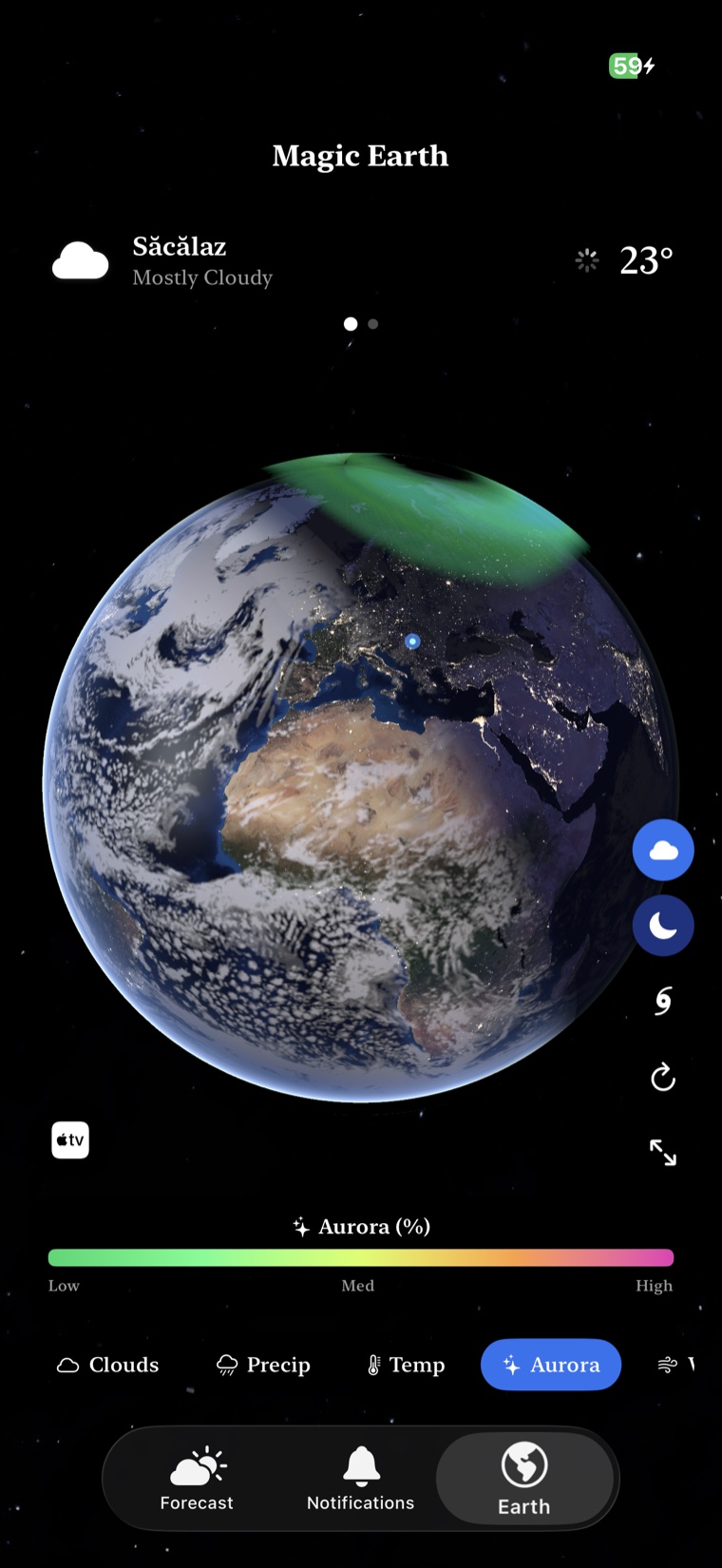
- The UV tile shows the current index and its rating, from low to extreme. Tap it for the hour-by-hour timeline so you can see when it peaks today.
- Beach Time and Outdoor Comfort use UV together with wind and temperature to point out the best windows to be outside.
- The Earth tab has a UV layer that paints the whole planet. You can watch the band of high UV follow the sun.
- Weather Chat can answer questions such as "Do I need sunscreen this afternoon?" on devices with Apple Intelligence.
Common questions
At what UV index do I need sunscreen?
From a UV index of 3 upward. Below 3, most people need no protection for normal time outdoors, though snow and long exposure can still cause a burn.
Can you get sunburned on a cloudy day?
Yes. Thin or broken cloud lets most ultraviolet light through, and bright cloud edges can even scatter extra UV toward you. Only thick, dark cloud cuts it substantially.
What time of day is UV highest?
UV peaks at solar noon, when the sun is highest in the sky. That is usually between about 12:00 and 13:30 on the clock, depending on your location and daylight saving time. Roughly 60% of the day's UV arrives between 10 AM and 2 PM.
Is the UV index related to temperature?
No. UV depends on the height of the sun, the ozone layer, altitude and cloud. A cool, breezy day in late spring can have a much higher UV index than a hot day in early autumn.
What does “feels like” temperature mean?
Feels-like temperature combines air temperature with wind in the cold and humidity in the heat. See how wind chill and heat index work, with examples.
Golden hour and blue hour: when they happen and how weather changes them
Golden hour is when the sun is within 6 degrees of the horizon; blue hour follows just after sunset. See how long each lasts and which skies are best.
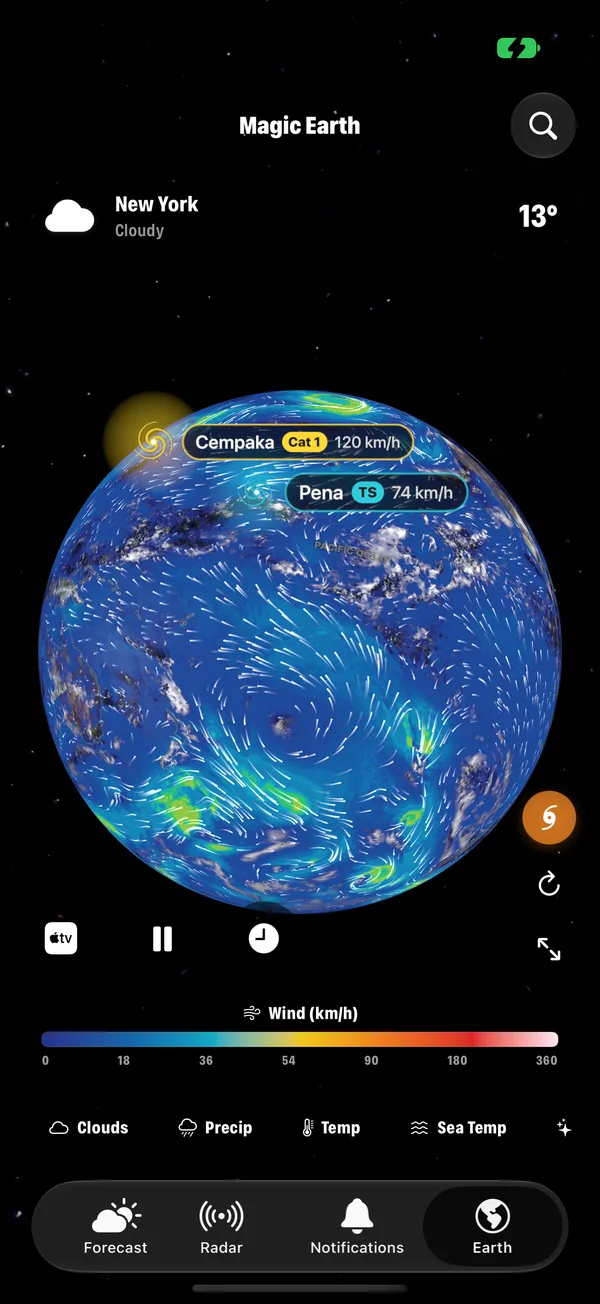
Every Earth layer in Magic Weather, explained
Clouds, rain, temperature, wind, pressure, sea temperature, aurora, UV, ozone, satellites, earthquakes and fires: what each Magic Weather layer shows.