Weather, explained.
Guides for getting more out of Magic Weather, and plain-language answers to the questions behind every forecast.
App guides
Step-by-step help for getting more out of Magic Weather on iPhone, iPad, Mac, Apple Watch and Apple TV.
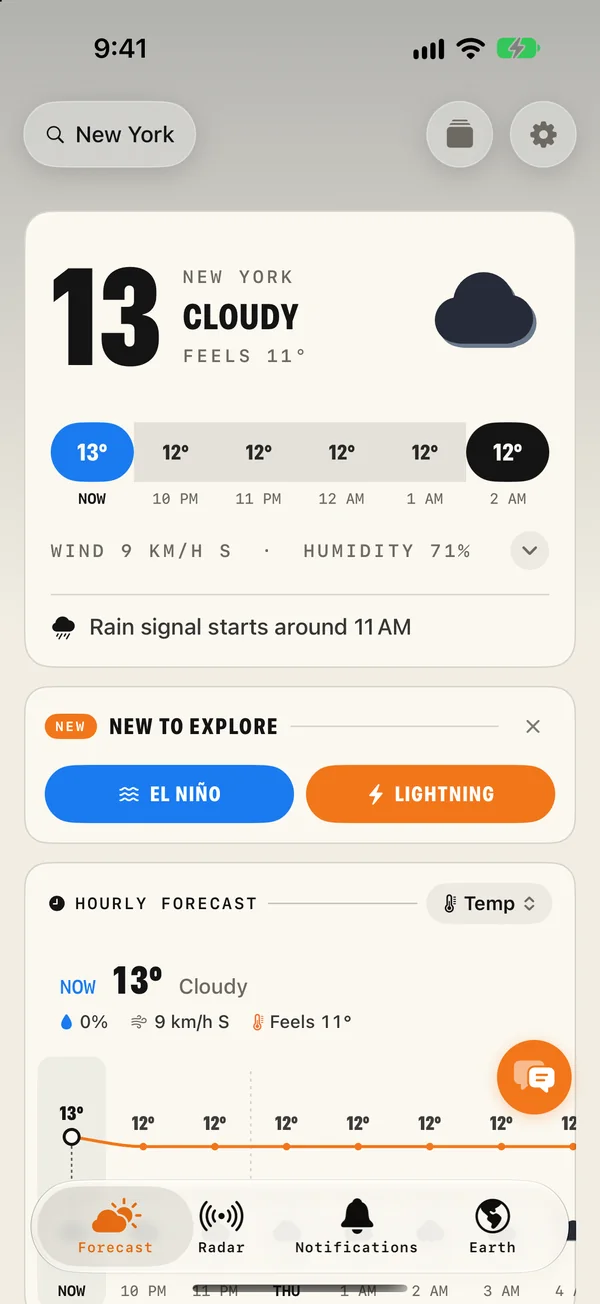
Getting started with Magic Weather: your first ten minutes
Install Magic Weather, set your place, turn on alerts, pick a theme and add a widget. A ten-minute setup guide for iPhone, iPad, Mac, Watch and TV.
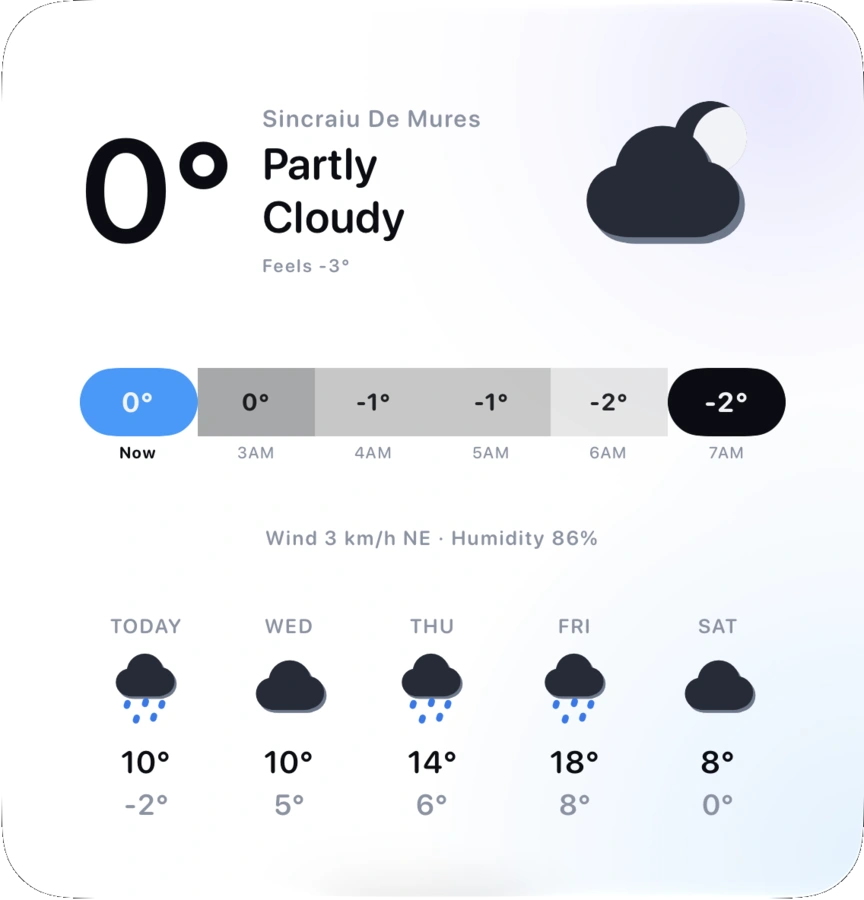
How to add weather widgets to your iPhone Home Screen and Lock Screen
Add Magic Weather widgets to your iPhone Home Screen, Lock Screen and Mac desktop: step-by-step, with what each widget shows and fixes if one is stale.
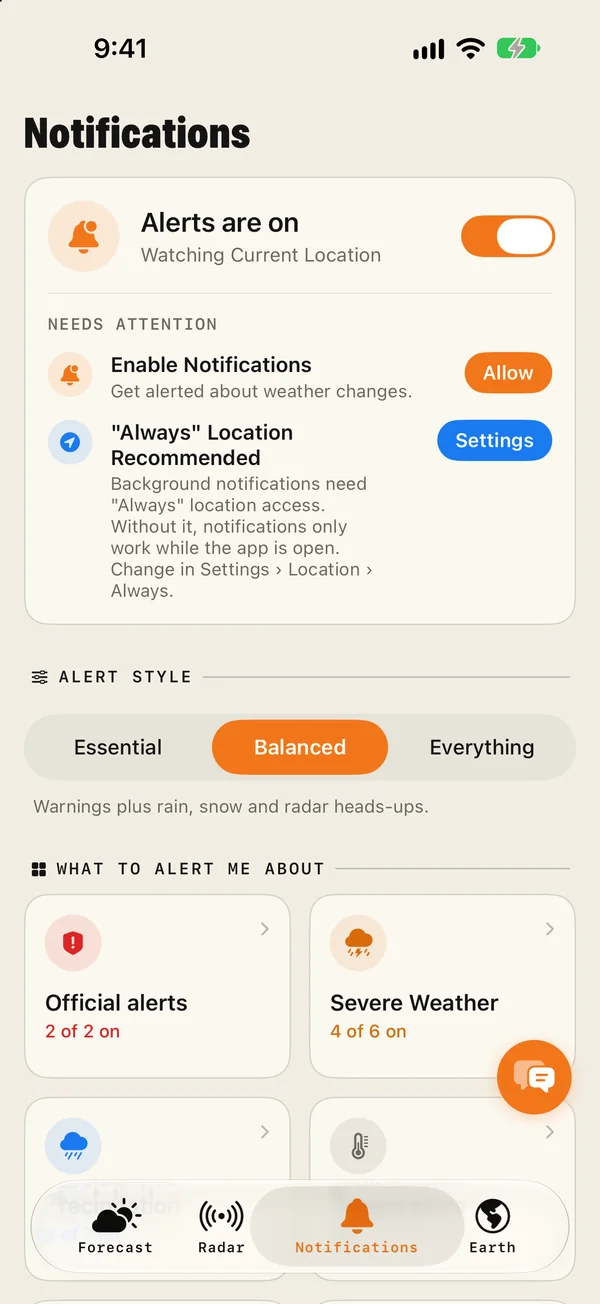
How to get rain alerts on your iPhone before it starts
Set up rain alerts on iPhone with Magic Weather: a notification before rain starts and stops, a Live Activity that follows the shower, and fixes if none arrive.
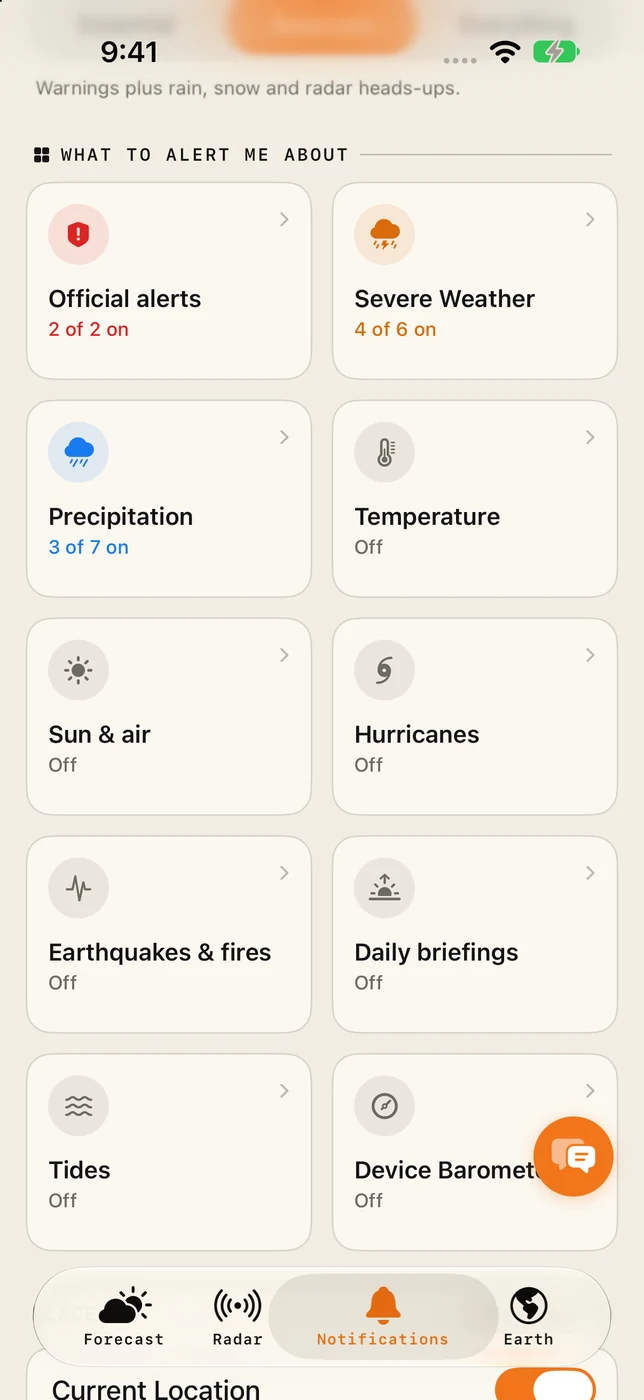
Severe weather alerts on iPhone: how to set them up properly
Set up severe weather alerts on iPhone with Magic Weather: official warnings, storms, lightning, wind and hurricanes, for home and every place you watch.
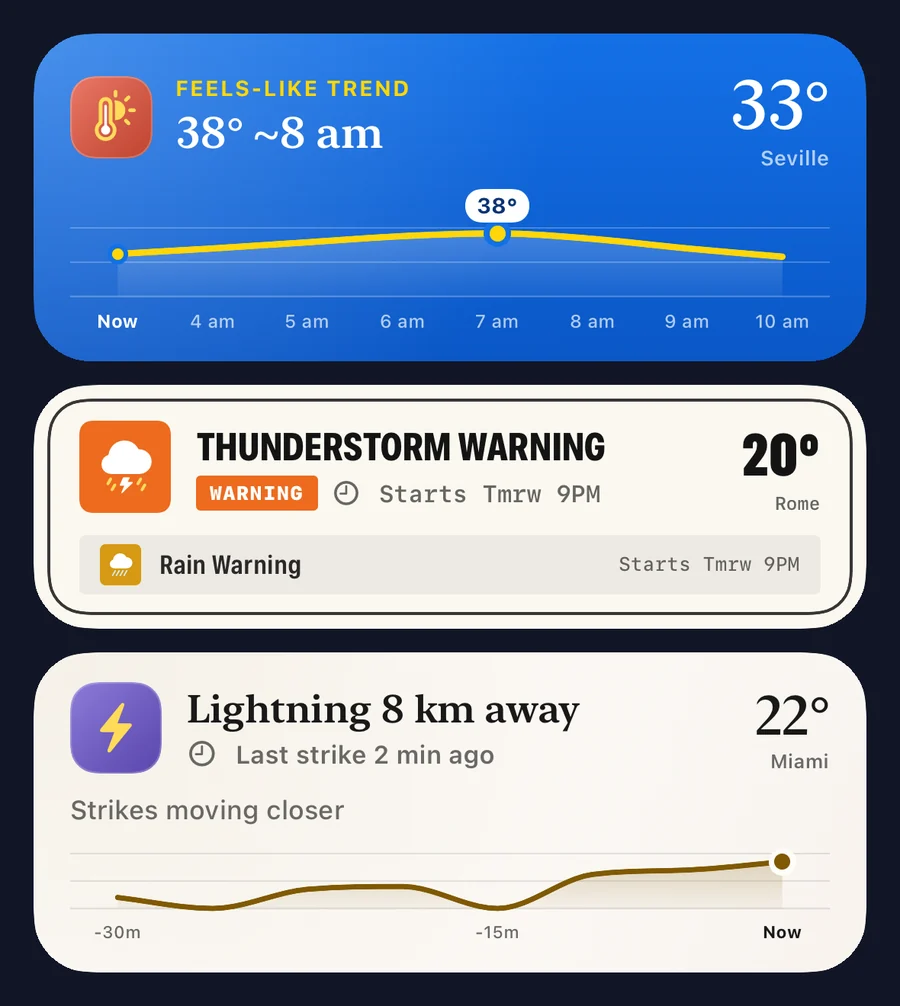
Weather in the Dynamic Island: how Live Activities follow the rain
Magic Weather's Live Activities put rain, wind, heat, lightning and warnings on your iPhone Lock Screen and Dynamic Island until the weather has passed.
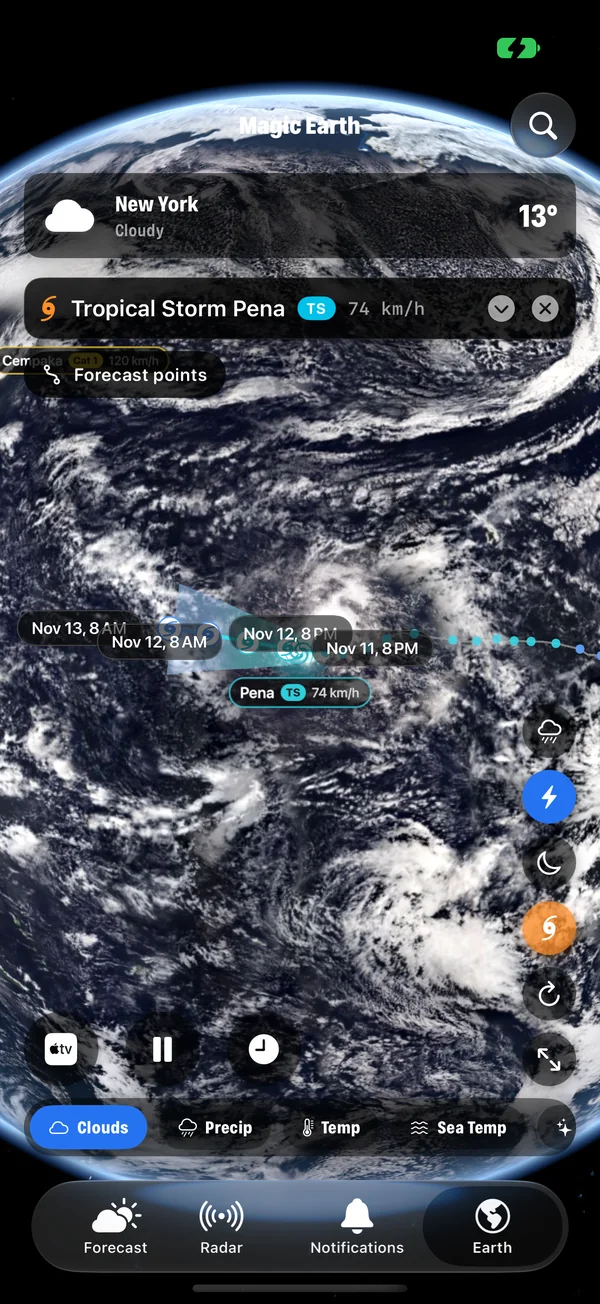
How to track hurricanes and tropical storms on a 3D globe
Follow every active hurricane, typhoon and tropical storm on a live 3D Earth with Magic Weather: track, cone, wind and pressure on iPhone, Mac and Apple TV.
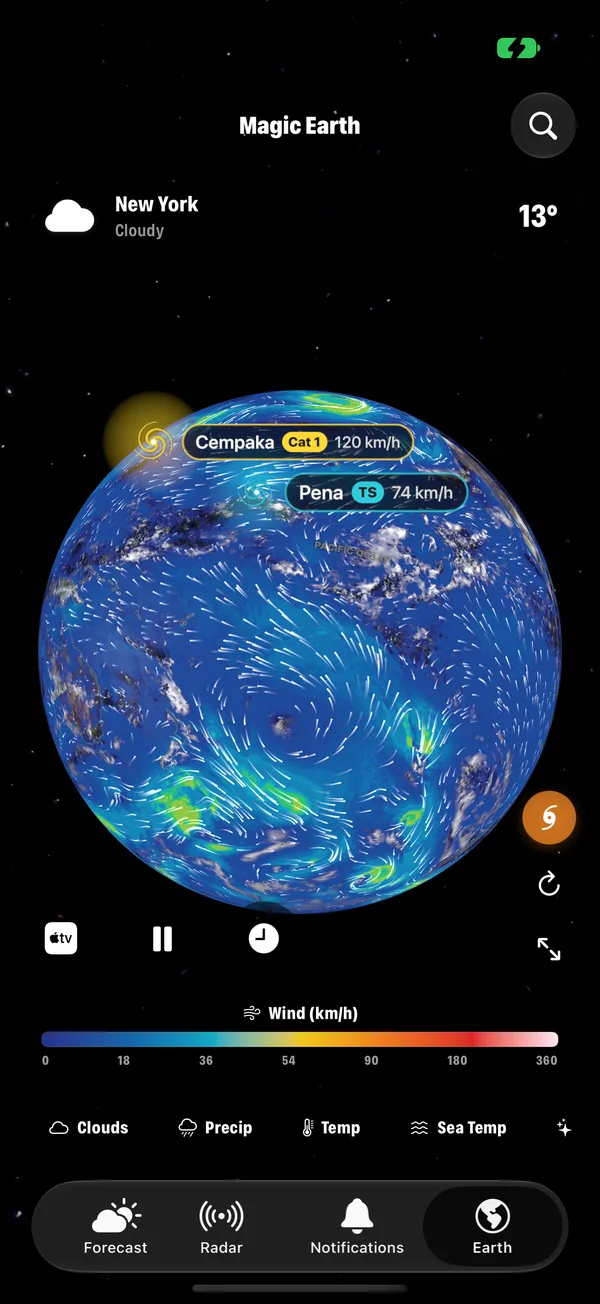
Every Earth layer in Magic Weather, explained
Clouds, rain, temperature, wind, pressure, sea temperature, aurora, UV, ozone, satellites, earthquakes and fires: what each Magic Weather layer shows.
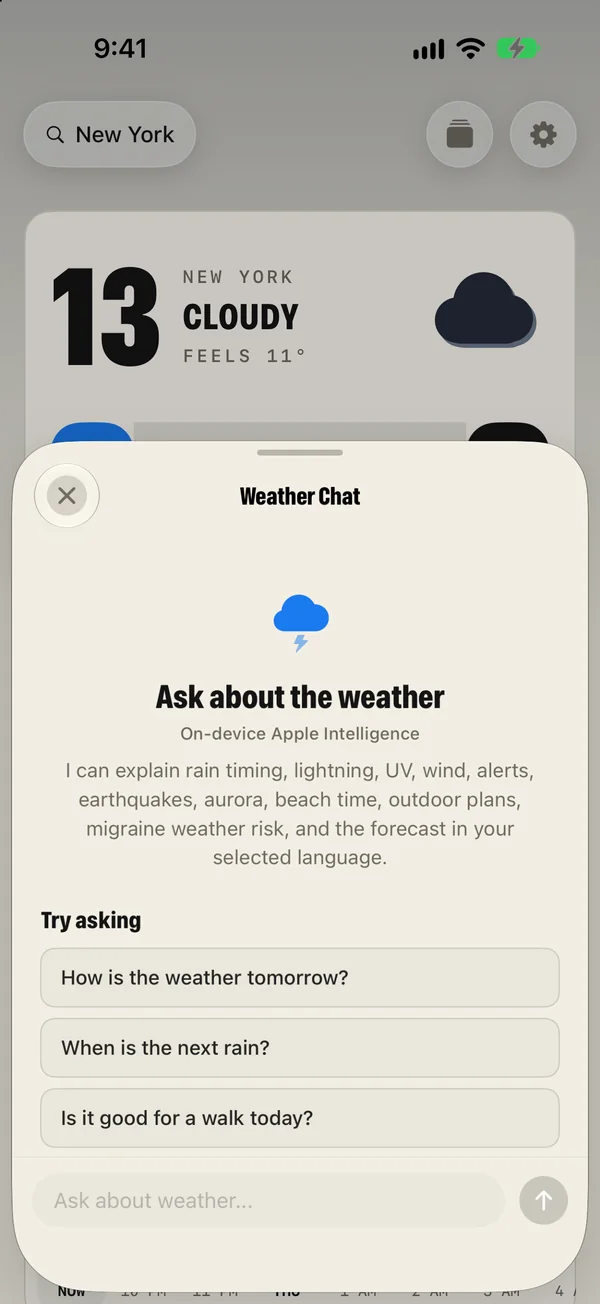
Ask the forecast: Weather Chat and the AI Weather Brief
Ask Magic Weather a question in your own words, or read the AI Weather Brief: a short on-device summary of what matters today. Here is how both work.
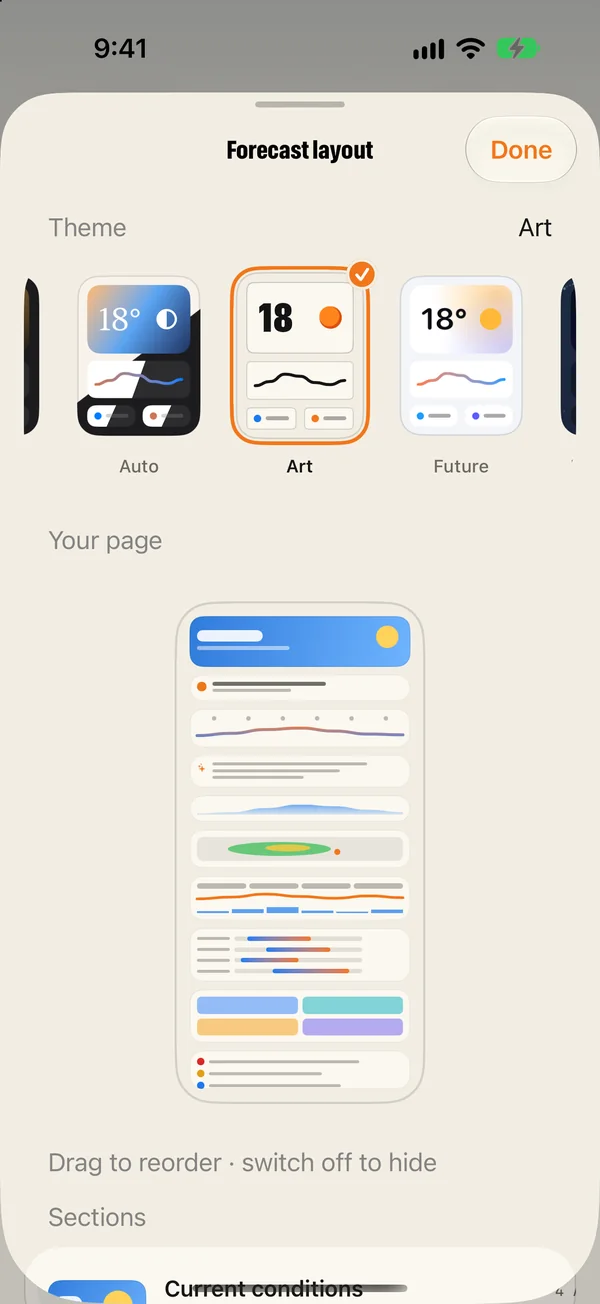
Make it yours: themes, layout and app icons in Magic Weather
Choose from eight themes, reorder or hide sections of the Forecast page, pick your detail tiles and change the app icon. A guide to making it yours.
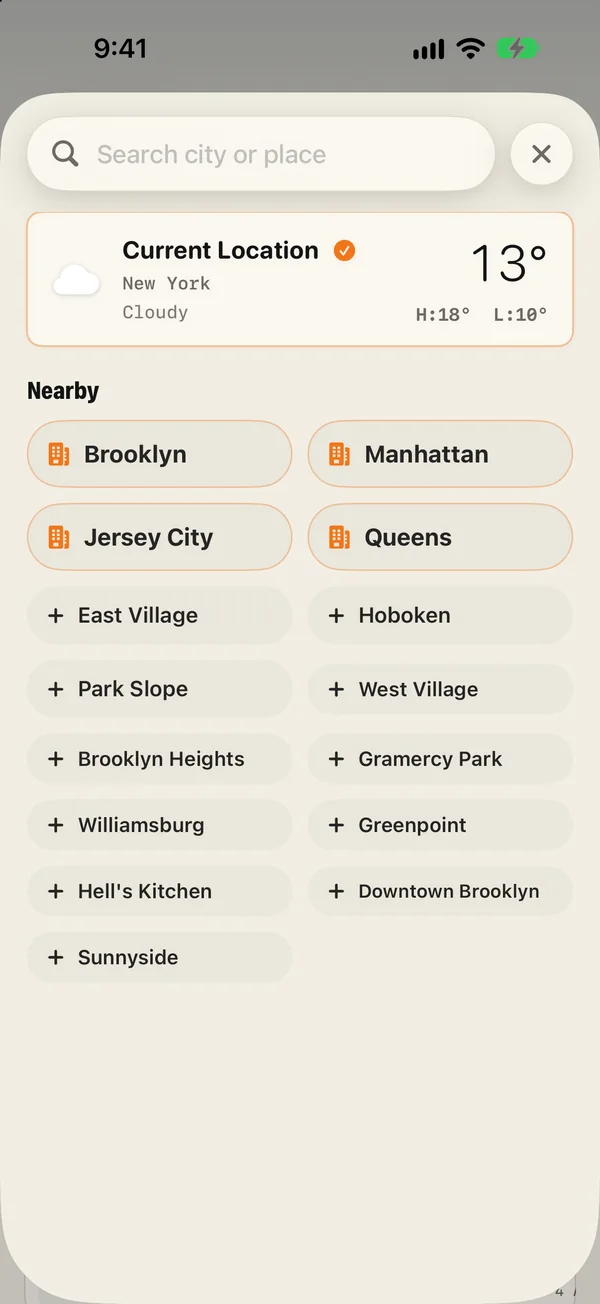
Weather for every place you care about: saving and switching cities
Save cities in Magic Weather, switch between them in a tap, see which have active warnings, and give each widget its own place. A guide for travellers.
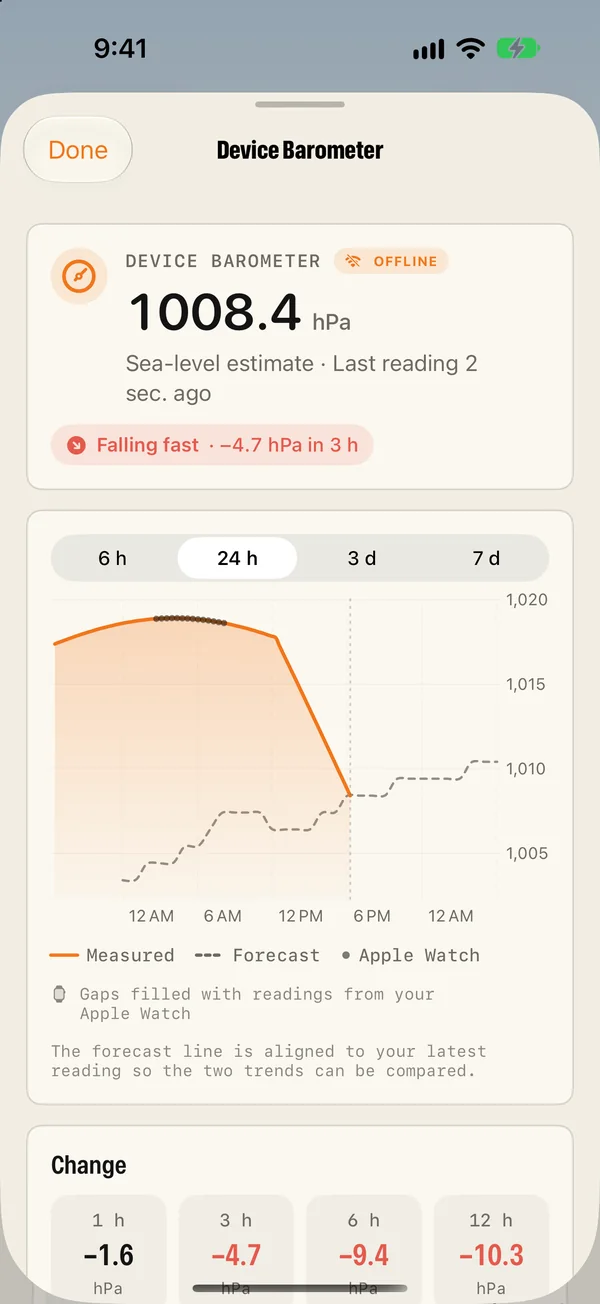
Your iPhone has a barometer. Here is how to use it as a storm warning
Your iPhone measures air pressure. Magic Weather logs it and warns you when it falls fast, even offline. How it works on iPhone and Apple Watch.
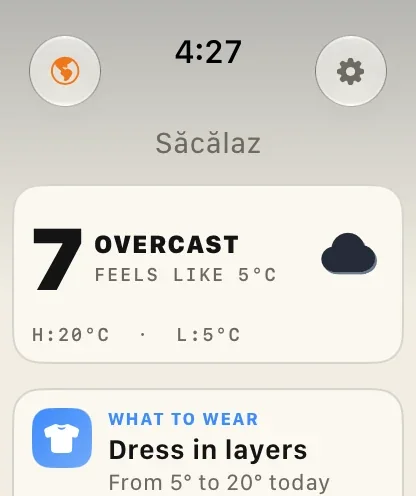
Magic Weather on Apple Watch: the forecast, the Earth and radar on your wrist
What the Magic Weather Apple Watch app shows, how to add complications to your watch face, and how it works on its own without your iPhone.
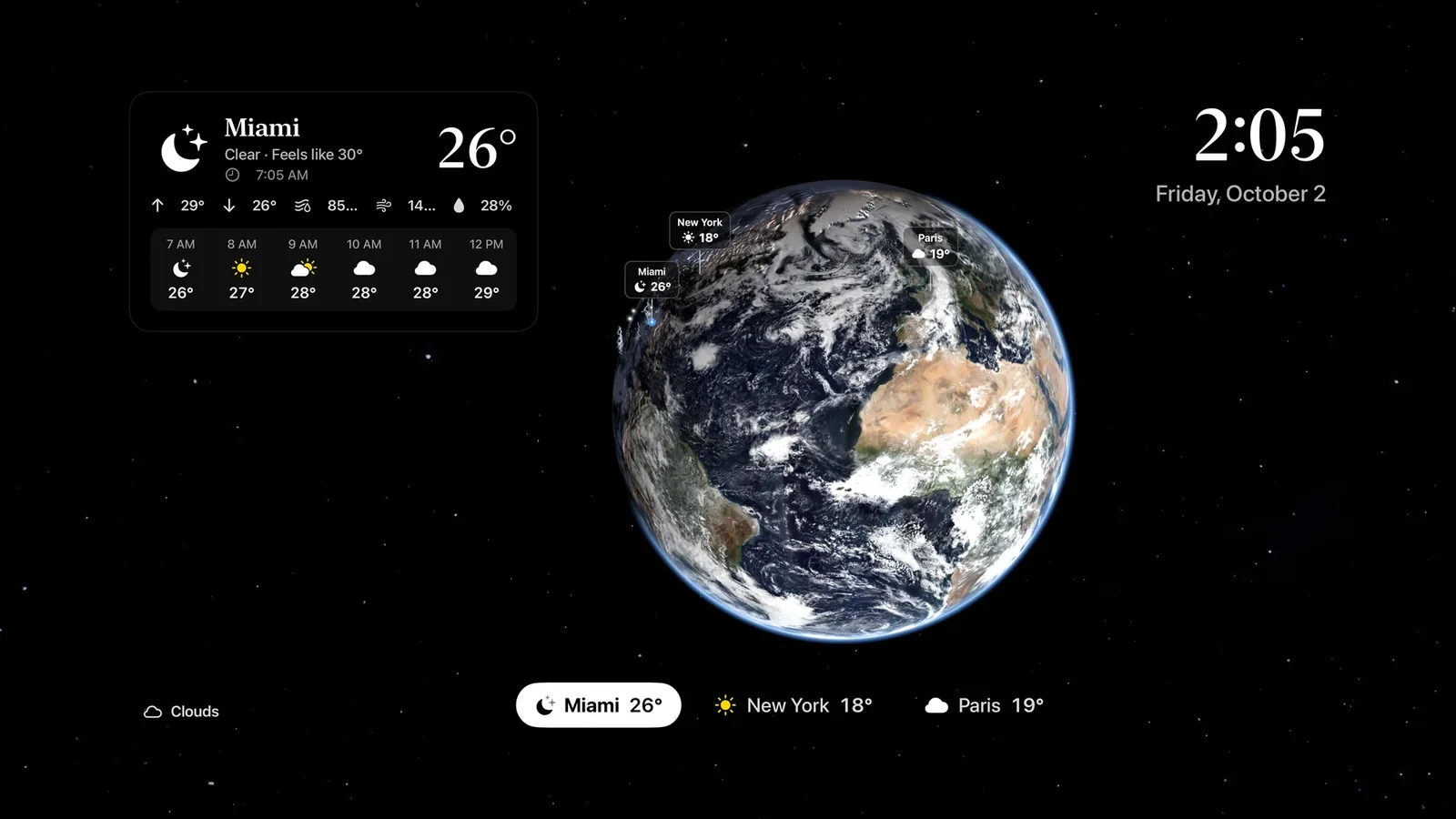
A live Earth on your TV: the Magic Weather Apple TV app
Put a photoreal, slowly turning Earth with real clouds on your TV. A guide to the Magic Weather Apple TV app: layers, storms, cities, sounds and the remote.
Turn your iPhone into a bedside Earth clock with Nightstand
Nightstand turns the Magic Weather Earth into a bedside clock with tomorrow's weather. It dims at night and starts by itself on a charger, held sideways.
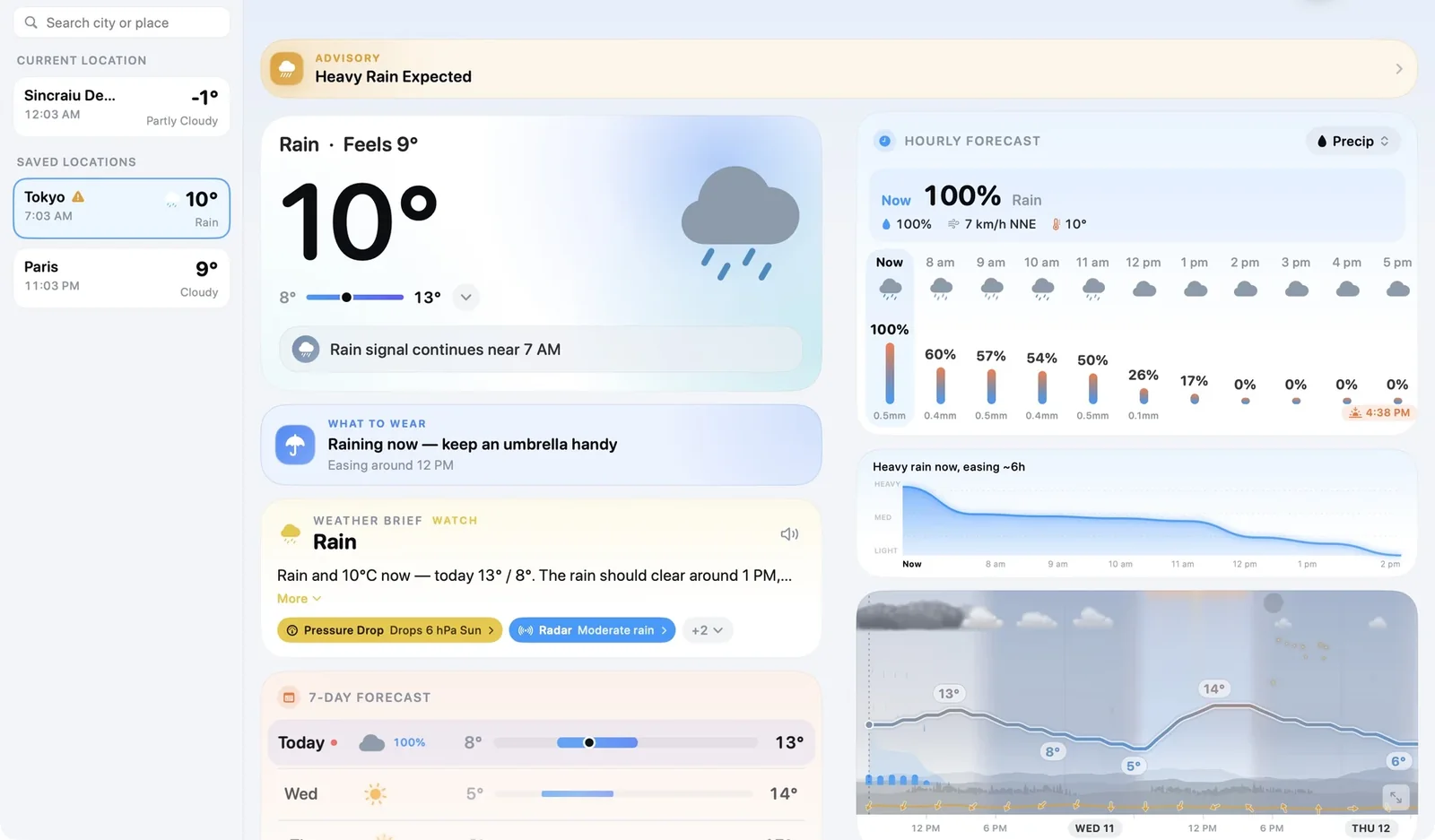
Magic Weather on Mac: menu bar weather, a sidebar of places and the Earth
A guide to Magic Weather on Mac: the temperature in the menu bar, places in a sidebar, a two-column forecast, the Earth with trackpad control, and shortcuts.
Use your Netatmo weather station in Magic Weather
Connect your Netatmo station to Magic Weather and see its live temperature, humidity, pressure, wind and rain instead of the forecast's estimate.
Weather explained
Plain-language answers to the questions behind every forecast.
How to read a meteogram (and see your whole week in one picture)
A meteogram shows temperature, rain, wind and sky on one timeline. Learn to read each line in two minutes, and spot the best hours of your week.
What does a 40% chance of rain actually mean?
A 40% chance of rain does not mean it rains 40% of the day or over 40% of the area. Here is the real definition, and how to plan around the number.
What does “feels like” temperature mean?
Feels-like temperature combines air temperature with wind in the cold and humidity in the heat. See how wind chill and heat index work, with examples.
Dew point vs humidity: which one tells you how muggy it feels?
Relative humidity changes all day even when the air does not. Dew point is the number that tells you how muggy it feels. Here is how to read both.
Barometric pressure and weather: what a falling barometer means
Falling pressure means unsettled weather is on the way; rising pressure means it is clearing. Learn what the numbers mean and how fast is fast.
Wind speed vs wind gusts: which number should you plan around?
Wind speed is an average over minutes; a gust is a peak lasting seconds. Learn the difference, the Beaufort scale, and which number to plan around.
How to read weather radar: colours, movement and what radar misses
Radar colours show how hard it is raining, and the loop shows where the rain is heading. Learn to read both, and the blind spots every radar has.
UV index explained: what the numbers mean and when to use sunscreen
The UV index runs from 0 to 11+. Protect your skin from 3 upward. See the full scale, when UV peaks, and why clouds and cool air do not protect you.
Air quality and PM2.5 explained: what the numbers mean for your day
PM2.5 is fine dust small enough to reach your lungs. Learn the air quality scale, what counts as safe, and what to change when the number is high.
How accurate are weather forecasts, really?
A 5-day forecast is right about 90% of the time, a 7-day about 80%, and a 10-day only about half. Here is why, and how to read each range.
Why do weather apps show different forecasts for the same place?
Two weather apps can disagree about the same afternoon because they use different forecast models, update times and locations. Here is how to choose.
Hurricane categories explained: what Category 1 to 5 really mean
Hurricane categories measure wind speed only. See the full Saffir-Simpson scale, what the cone of uncertainty shows, and why water is the bigger danger.
How far away is lightning? Count the seconds
Count the seconds between the flash and the thunder and divide by three for kilometres, or five for miles. Plus the 30-30 rule and where to shelter.
How fog forms, and how to tell when it is coming
Fog forms when air cools to its dew point near the ground. Learn the four main types, the signs the evening before, and when it is likely to lift.
The Kp index and aurora forecasts: when can you see the northern lights?
The Kp index rates geomagnetic activity from 0 to 9. See what Kp you need at your latitude, plus the sky conditions that matter just as much.
El Niño and La Niña explained: how a patch of ocean changes your weather
El Niño and La Niña are warm and cool phases of the tropical Pacific that shift weather worldwide. See how they are measured and what each brings.
How weather satellites photograph the whole Earth
Two kinds of satellite watch the weather: one hovers 36,000 km up, the other sweeps pole to pole. Here is how their pictures become a cloud map.
Can the weather trigger migraines? What pressure changes really do
Many people with migraine say weather sets it off. Here is what studies show about falling pressure, heat and storms, and how to track your own pattern.
Golden hour and blue hour: when they happen and how weather changes them
Golden hour is when the sun is within 6 degrees of the horizon; blue hour follows just after sunset. See how long each lasts and which skies are best.
How rainbows form, and how to know when one is about to appear
A rainbow appears opposite the sun at an angle of 42 degrees when sunlight hits falling rain. Learn the geometry and the conditions that predict one.
Stargazing weather: how to tell if tonight is a good night for the stars
A clear forecast is not enough. Check cloud height, humidity, wind, the moon and how dark your sky is. A checklist for picking a good night for stars.
Why do I get static shocks in winter? Blame the dew point
Static shocks happen when the air is too dry to carry charge away. See why cold weather makes indoor air so dry, and how to stop the zaps.
Cold front vs warm front: what each one brings, and how to spot it coming
A cold front brings a short burst of heavy rain and a sharp change; a warm front brings hours of steady rain. Learn the signs of each and what follows.