Possibly, for some people. In surveys, a third to a half of people with migraine name weather as a trigger. Studies have linked attacks to falling barometric pressure, rising temperature and approaching storms, but the effects are modest and vary a lot from person to person. The most useful step is to keep a headache diary beside the pressure trend and see whether a pattern appears for you.
A note first. This article describes weather and research. It is not medical advice. If your headaches are frequent, severe or changing, see a doctor.
What people report
Weather is one of the most commonly named migraine triggers, alongside stress, poor sleep, missed meals and hormonal changes. In surveys of people with migraine, between a third and a half say that weather can bring on an attack.
The changes mentioned most often are:
- Falling barometric pressure, typically before rain or a storm
- Heat, and sudden jumps in temperature
- High humidity, or very dry air
- Bright sun and glare
- Strong or warm, dry winds
- Thunderstorms
What studies have found
The research is genuinely mixed, and it is worth being honest about that.
- Pressure. A study in Japan that compared patients' headache diaries with weather records found attacks more frequent when the pressure fell by more than about 5 hPa compared with the day before. Other studies have found small effects or none.
- Temperature. A large study of emergency department visits in Boston found that a rise of 5 °C in the previous day's temperature was associated with about 7.5% more visits for severe headache. Lower pressure two to three days earlier also showed a link.
- Lightning. One study in the United States found headaches about 30% more likely on days when lightning struck within roughly 40 kilometres of home, even after allowing for other weather.
- Warm winds. Research in Canada found that some people are more likely to have attacks on days with strong Chinook winds, or on the day before.
Two patterns run through all of it. The effects are real but modest: weather shifts the odds, it does not flip a switch. And they are individual: when researchers look at people one by one, some are clearly sensitive to a particular change and many are not sensitive at all.
Why pressure might matter
Nobody has proved a mechanism. The leading ideas are:
- Pressure differences between the air outside and the air in the sinuses and inner ear, which may irritate nearby nerves.
- Effects on blood vessels and on the nerve pathways involved in migraine, which seem to be more excitable in people who have the condition.
- Indirect effects. Weather changes sleep, activity, hydration and mood, all of which are triggers in their own right.
There is also a statistical trap. Changeable weather is common, and so are migraines. It is easy to remember the attacks that came with a storm and forget the storms that came without one. A diary is the only fair test.
How to find your own pattern
- Keep a diary for at least two months. Note the date and time of each attack and how bad it was. Note the days with none too.
- Record the pressure trend. Not just the value: was it falling, rising or steady, and how fast? How to read the trend.
- Note other triggers on the same days. Sleep, stress, alcohol, skipped meals, your cycle. Triggers tend to stack.
- Look for repeats. One coincidence means nothing. The same change before most of your attacks is worth taking to your doctor.
What you can do with a warning
You cannot change the weather, but a day's notice is useful.
- Protect the basics. Regular sleep, regular meals and plenty of water matter more on a risky day, because triggers add up.
- Plan the day. If you can, move the demanding task or the long drive.
- Manage light and heat. Sunglasses, shade and a cool room help if those are triggers for you.
- Have your medication with you, and use it as your doctor advised. Many treatments work best when taken early.
Pressure and migraine risk in Magic Weather
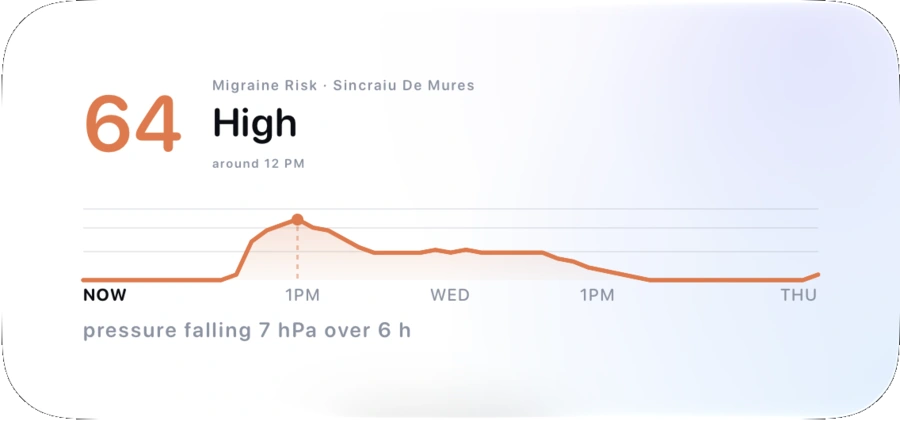
- Migraine risk is one of the detail tiles on the Forecast tab. It is an estimate based on forecast weather changes, and it shows what is driving it, such as how far the pressure is falling.
- A widget puts the same outlook on your Home Screen.
- The Pressure tile shows sea-level pressure with a trend arrow, and its timeline shows the hours ahead.
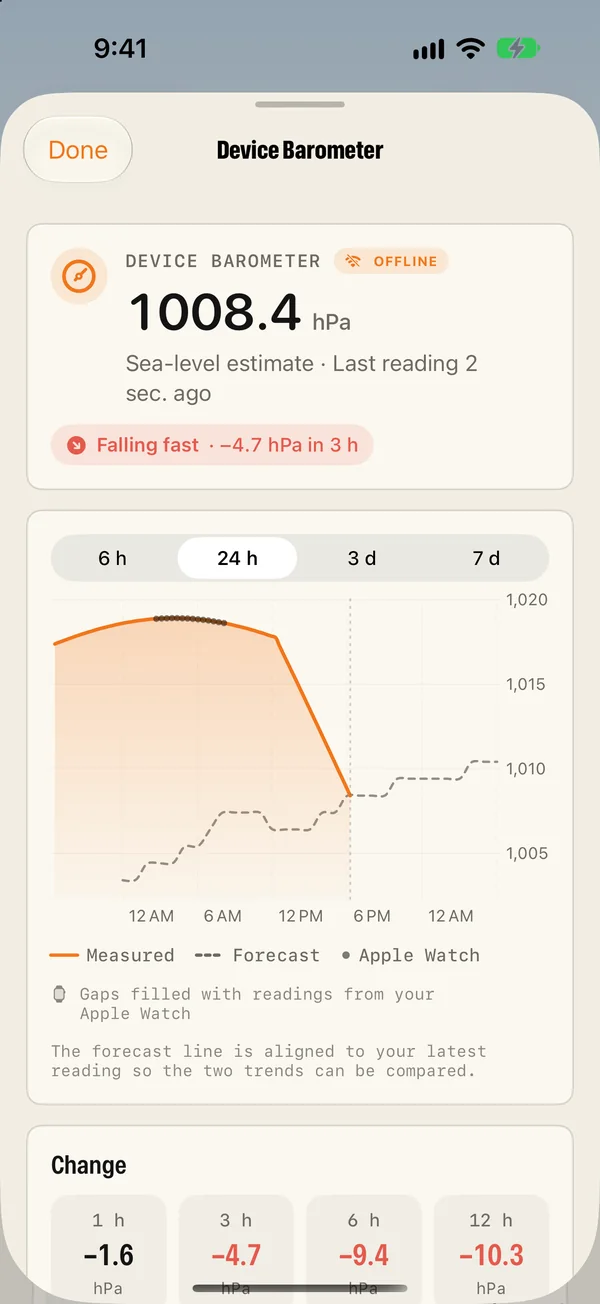
- The Device Barometer tile reads the sensor in your iPhone, so you can see the pressure where you actually are and how fast it is changing. More on the built-in barometer.
- Weather Trends flags significant pressure drops in the coming week.
- A migraine risk alert and a pressure drop warning are among the experimental notifications you can switch on.
The app can tell you what the air is doing. Only you and your doctor can tell what that means for you.
Common questions
Does barometric pressure cause headaches?
It may contribute for some people. Several studies have found more migraine attacks when pressure falls, while others found no effect. Sensitivity appears to be individual, so tracking your own headaches against the pressure trend is the best test.
How much pressure change can trigger a migraine?
There is no agreed threshold. One Japanese study found attacks more likely when pressure fell by more than about 5 hPa from the previous day. Many people who are sensitive report that the speed of the change matters more than the size.
Why do I get a headache before a storm?
A storm is preceded by falling pressure, rising humidity, changing temperature and often wind, any of which may act as a trigger. One study also found headaches more likely on days with lightning nearby. It is hard to separate these effects because they arrive together.
Can I prevent a weather migraine?
You cannot change the weather, but knowing a change is coming lets you look after the things you can control: sleep, regular meals, water, and having your medication with you. Talk to your doctor about a plan if weather attacks are frequent.
Barometric pressure and weather: what a falling barometer means
Falling pressure means unsettled weather is on the way; rising pressure means it is clearing. Learn what the numbers mean and how fast is fast.
Your iPhone has a barometer. Here is how to use it as a storm warning
Your iPhone measures air pressure. Magic Weather logs it and warns you when it falls fast, even offline. How it works on iPhone and Apple Watch.
Dew point vs humidity: which one tells you how muggy it feels?
Relative humidity changes all day even when the air does not. Dew point is the number that tells you how muggy it feels. Here is how to read both.