
On clear, calm nights the ground cools and chills the air beside it. Dense cool air can drain downhill and collect in hollows. A layer in which temperature increases with height is called an inversion.
Follow the air after sunset
A sheltered hollow and a ridge can spend the afternoon at nearly the same temperature. After sunset, exposed ground loses heat and cools the air immediately above it. On a still night that shallow layer can settle into dips. Pooling gives the lowest field, the riverbank and the road at the foot of a hill a head start on cooling. National Weather Service guidance on terrain and overnight cooling.
Think of the slope in three pieces. At the bottom you might be standing in the cold pool. Partway up, a house can sit in warmer air just above it. A much higher peak has its own wind and temperature. Drawing a straight temperature line from the valley all the way to the summit misses the shallow layer that matters to the first two houses.
Look for a night that lets the difference develop
Clear skies, light winds and a long night favour surface cooling. A breeze that mixes the air can narrow the difference. After sunrise, warming at the ground can begin to break down the shallow inversion. The timing depends on local conditions, including how long a valley stays shaded. National Weather Service explanation of inversions.
Compare two places at the same hour
For a sunrise photography trip, save the village and the hillside destination as separate places in Magic Weather. Look at the hour you leave home and the hour you expect to reach the orchard. Compare sky cover and wind alongside temperature. Reading today's high for one place and the current temperature for the other disguises the difference you actually care about.
A local observation can add detail when both forecasts look alike. Check its timestamp and where the station sits. An airfield on open ground, a sensor beside the river and a thermometer on a sunny wall sample different surroundings. A bank of valley fog is another clue that moist air near the floor has cooled, though a perfectly clear valley can hold a cold pool too.
Common questions
Does every cold valley have fog?
Fog also needs enough moisture for droplets to form near the ground. An inversion can occur under a clear sky.
Will the hilltop always be warmer?
The difference depends on the depth of the cold layer, the terrain, wind and time of day. A high summit can sit well above the inversion.
How fog forms, and how to tell when it is coming
Fog forms when air cools to its dew point near the ground. Learn the four main types, the signs the evening before, and when it is likely to lift.
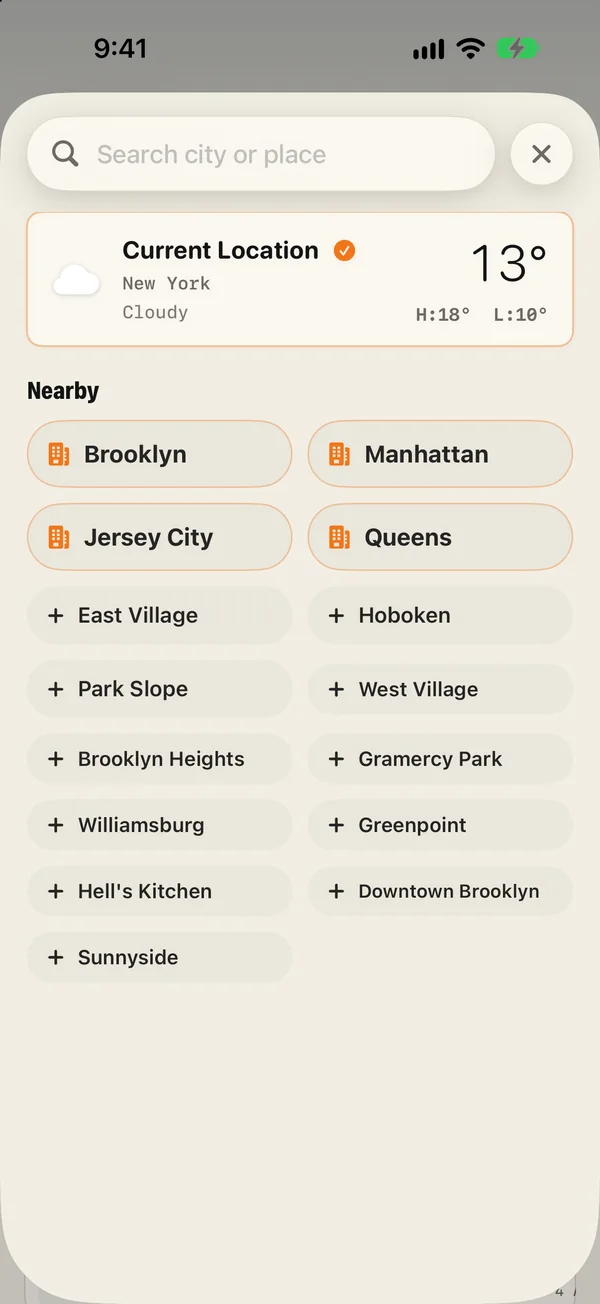
Weather for every place you care about: saving and switching cities
Save cities in Magic Weather, switch between them in a tap, see which have active warnings, and give each widget its own place. A guide for travellers.
Dew point vs humidity: which one tells you how muggy it feels?
Relative humidity changes all day even when the air does not. Dew point is the number that tells you how muggy it feels. Here is how to read both.